
-
P-401658409
9367-0123QC
-
Emergency 24/7
(514) 992-0755
9367-0123QC
(514) 992-0755
GT Extermination promises you an exceptional and unique service that only aspires trust.
Problems with mice, bedbugs, ants or spiders? GT Extermination is here for you!
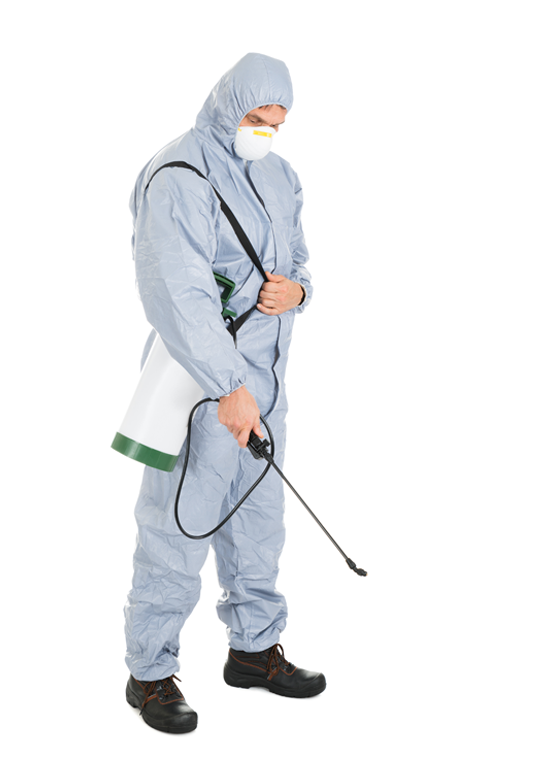

GT Extermination promises you a unique and exceptional service that only aspires to trust. Our team of technicians has the experience, expertise and skills to perform an effective and reliable extermination job that will get rid of your parasitic troubles without posing any danger to the environment, your animals and your children. We know and understand the importance of keeping the most loved ones in a healthy and safe environment.

GT Extermination offers commercial services to protect your business and your investment. Whether it is for small shops or small premises or for large businesses or for hotels or for restaurants and other areas, our services are specific to your needs and comply with health codes, maintenance codes and storage practices. Your business is safe and in good hands because your satisfaction is very important to us.

GT Extermination understands the risks associated with the location of industrial buildings, as most of the time they are located near fields, railways or highways. We offer a range of services that meet your specific needs for factories, food warehouses, storage buildings and other industrial buildings. Your industrial building is safe and in good hands because your satisfaction is very important to us.

GT Extermination understands very well that the traffic in institutional buildings, such as hospitals, clinics, schools, libraries and others, poses a potential risk of parasitic infestation. That's why we offer services that meet your specific needs in order to protect citizens, old and young, who use these buildings. Your institutional building is safe and in good hands because your satisfaction is very important to us.
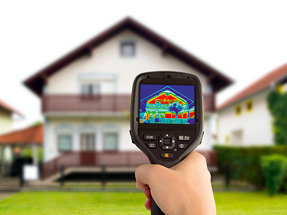
Professional inspection services by thermal camera to help you when buying or selling your home. Pre-inspection for rodents or vermin.

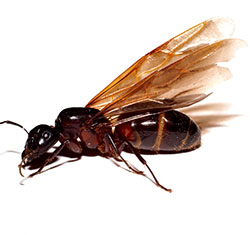
What do they look like?
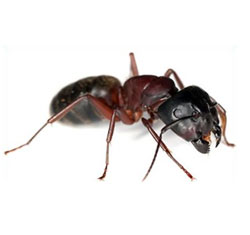
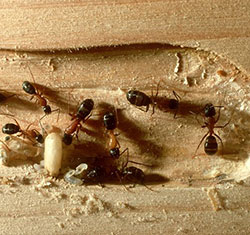
The carpenter ant and the black ant are among the most common species of carpenter ants in Canada. The body of the red carpenter ant is blackish with a red or brown shade. The black ant-woody ant is, for its part, uniformly black with shades of brown.
The carpenter ant is between 6 and 25 mm in length (0.24 to 1 inch). Its body is divided into three parts, one of which squeezes into a very thin waist. Its antennas are arched and segmented. Adult males and females are winged at the time of mating.
What damage can they cause?
Carpenter ants are well known for causing damage to wooden structures. Their presence in homes is also troublesome when looking for food. Carpenter ants feed on both plant and animal matter. Insects and other small invertebrates, as well as honeydew produced by aphids and other insects, are their main sources of food. The presence of protein and sweet foods in and around homes also attracts female workers in search of food.
What do they look like?
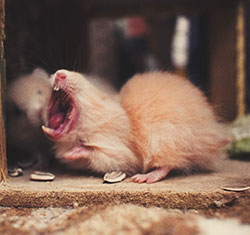
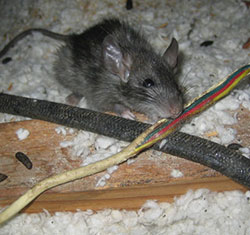
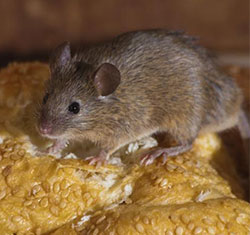
Living in an urban setting, the common mouse is recognizable by its large ears and its light brown or dark gray coat with a paler belly. The deer mouse is brown or gray and has white belly and legs. It is easily recognizable by its tail whose underside is white. In the fall, the deer mouse sometimes invades buildings that are near a field or woodlot.
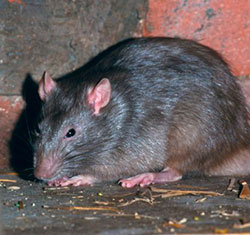
Rats are larger than mice and can weigh up to 0.5 kg (1 lb). The Norway rat and the black rat are similar, but they do not have the same behavior. The Norway rat builds elaborate networks of galleries and burrows at ground level and prefers wet locations such as crawl spaces and building perimeters. The black rat is an agile climber who prefers to live in trees, climbing shrubs and dense vegetation. It infests attics, carpentry or roofs as well as the upper floors of buildings.
The choice of control method depends on the type of rodent that is problematic. For example, traps designed for rats are unsuitable for catching mice.
What damage can they cause?
Rats and mice transmit diseases and can cause damage to buildings. The deer mouse is the main vector of hantaviruses which are deadly.
How to detect a problem from rats or mice?
When you hear noises in the walls at night that sound like screeching or scraping, or when you find nibbled and bitten objects or damaged food packaging, it is possible that a rat or mouse infestation may be the cause. The presence of faeces and urine, burrows or holes in or near foundations and fingerprints on dusty surfaces are also signs of infestation.
Rats and mice multiply rapidly. Even if they are just passing through, attack the problem without delay to avoid a serious infestation.

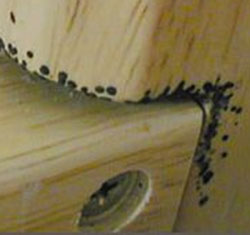
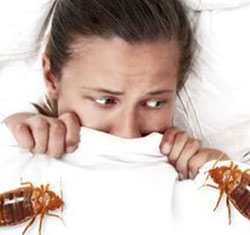
Bed bugs are small, wingless insects that feed on the blood of humans and animals while they sleep. Housed in the items they infest, they can be transported easily from one room to another. Bedbugs can not climb easily on metal or polished surfaces, let alone fly or jump.
They can measure up to 10 mm (0.40 in). Their oval shaped body is broad and flat and ends with a small enlarged head. Brownish, they take on a dark red shade when fed. Similar in shape to adults, but smaller in size (1.5 mm [0.06 in] long), young bedbugs are paler. They also take on a darker hue after feeding.
Bedbug eggs are white, 1 mm long and almost impossible to see on most surfaces. The female lays about 200 eggs in her life, at a rate of 2 to 4 eggs a day, which she lays in crevices and cracks, behind woodwork or any other well-hidden location. Eggs take 6 to 17 days to hatch.
Food and lifestyle
Bedbugs usually feed at night; they are attracted to the carbon dioxide produced by humans and pets. Their bites may not be detected immediately as they feed when their victim is asleep.
They prefer places where they can easily hide and eat regularly, such as bedrooms. Their flat bodies allow them to hide in very tight spaces, especially under wallpaper, behind frames, in power outlets, inside bed springs, in mattress covers and in bedside tables.
The newly hatched bedbugs feed as soon as they have access to food. They can survive for several weeks, or up to 18 months, without feeding themselves; more mature specimens can survive even longer.
Adult bedbugs live for about 10 months and sometimes a year or more in an environment that is suitable for breeding (at temperatures between 21 and 28°C).
Bedbug bites
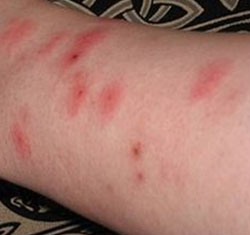
Bedbug bites can take up to 14 days to become visible. They are most often found on the face, neck, arms, legs and chest, but can be inflicted anywhere in the body.
The intensity of reactions to bedbug bites usually ranges from nil to low, but in some cases, the rarer, they can cause a serious allergic reaction. To avoid infection, do not scrape bites and keep wounds clean. The use of an antiseptic cream or lotion as well as an antihistamine can be helpful. Talk to your doctor if you need further advice.